
Copper Sulfate Testing: An Important Method for Detecting Free Iron Contamination on Stainless Steel
Copper Sulfate Testing is a chemical testing method used to detect free iron contamination on suitable stainless steel surfaces. It plays an important role in quality inspection and verification of stainless steel cleaning and passivation processes.
Stainless steel is widely used in industries where corrosion resistance, durability and surface cleanliness are essential. From oil and gas pipelines to chemical processing equipment, storage tanks, marine structures and industrial fabrication, stainless steel components must maintain their protective properties throughout their service life.
However, during welding, grinding, machining, fabrication and handling, stainless steel surfaces can become contaminated with free iron particles. These contaminants may cause rust staining and reduce the corrosion resistance of the finished component.
Fortune Seven Metal Coating LLC provides specialized industrial surface treatment and inspection solutions in the UAE and Oman, supporting customers who require reliable stainless steel cleaning, passivation and quality verification.
What Is Copper Sulfate Testing?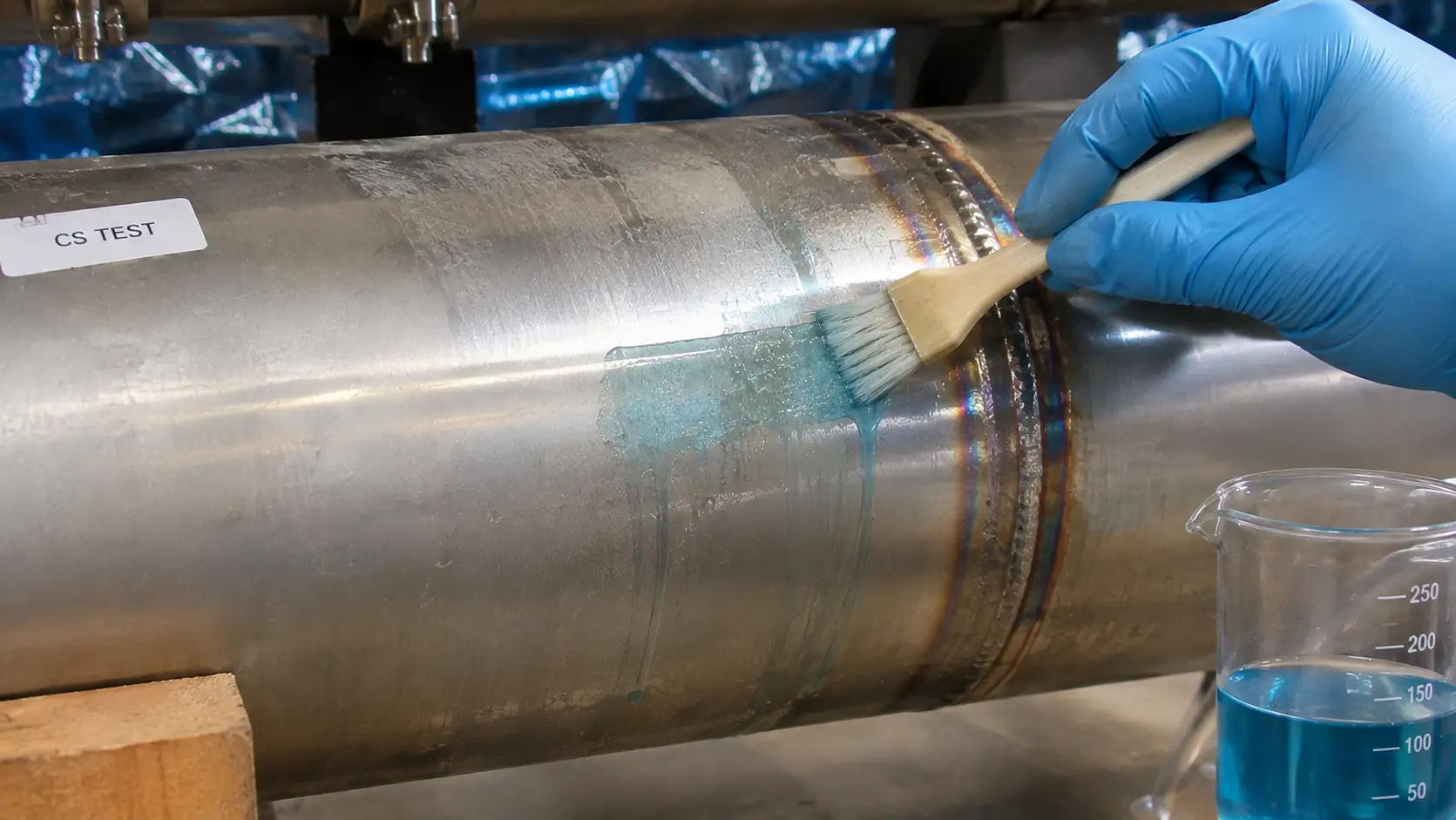
Copper Sulfate Testing is a chemical test used to identify the presence of free iron on stainless steel surfaces.
The test works through a chemical reaction between copper sulfate solution and metallic iron contamination. When free iron is present, copper ions in the solution can be reduced and deposited onto the affected surface.
The appearance of a copper-coloured deposit indicates the presence of free iron contamination under the specified test conditions.
This method is particularly useful for evaluating suitable stainless steel components after cleaning, fabrication or chemical passivation.
Copper Sulfate Testing is referenced in recognised industry standards, including ASTM A380/A380M and ASTM A967/A967M, subject to the applicable test method and material limitations.
Why Is Copper Sulfate Testing Important?
Stainless steel naturally develops a thin chromium-rich passive oxide layer that protects it from corrosion. However, external iron contamination can compromise surface cleanliness and lead to unwanted rust staining.
Copper Sulfate Testing helps identify this contamination before stainless steel components are placed into service.
Some important benefits include:
1. Detection of Free Iron Contamination
The test helps identify free iron particles introduced during manufacturing, welding, machining, grinding and handling.
2. Verification of Surface Cleanliness
It provides a practical method for checking whether suitable stainless steel surfaces are free from detectable metallic iron contamination.
3. Quality Control After Passivation
Copper sulfate testing can be used as one of the specified verification methods following stainless steel chemical passivation.
4. Reduced Risk of Rust Staining
Identifying and removing free iron contamination helps reduce the possibility of unwanted rust staining during subsequent service.
5. Improved Quality Assurance
Testing provides useful inspection information for fabrication companies, industrial maintenance contractors and quality control teams.
How Does the Copper Sulfate Test Work?
Copper Sulfate Testing is based on a displacement reaction involving metallic iron and copper ions.
When the test solution comes into contact with free iron on a suitable stainless steel surface, metallic copper can deposit on the contaminated area.
The general testing process involves the following stages:
Step 1: Surface Preparation
The stainless steel surface is cleaned appropriately to remove oil, grease, dirt and other contaminants that could interfere with the test.
Step 2: Preparation of Test Solution
A copper sulfate solution is prepared according to the applicable testing specification. The specified formulation and solution condition must be maintained.
Step 3: Application of Test Solution
The solution is applied to the selected stainless steel surface using an appropriate swabbing or immersion method.
Step 4: Observation Period
The surface is kept wet for the period specified by the applicable test procedure.
Step 5: Rinsing and Inspection
After the specified exposure period, the surface is carefully rinsed and dried without disturbing any copper deposits.
Step 6: Result Evaluation
The surface is visually inspected for copper-coloured deposits. Their presence indicates free iron contamination under the test conditions.
Testing should be conducted by trained personnel using the applicable procedure, material requirements and safety precautions.
What Does a Positive Copper Sulfate Test Result Indicate?
A positive copper sulfate test result generally indicates the presence of detectable free iron on the tested stainless steel surface.
Copper-coloured deposits may appear in areas where metallic iron contamination is present.
This suggests that additional cleaning or decontamination may be necessary before the component is accepted for its intended application.
The recommended corrective process depends on the material grade, surface condition and project specification.
After corrective treatment, the surface can be cleaned, rinsed and retested where required.
It is important to understand that Copper Sulfate Testing detects free iron contamination; it does not independently measure the thickness of the passive film or guarantee overall corrosion resistance.
Applications of Copper Sulfate Testing
Copper Sulfate Testing is useful in several industries where stainless steel surface quality and contamination control are important.
Oil and Gas Industry
Stainless steel pipelines, fittings, valves, storage equipment and process components may require free iron contamination testing after fabrication, cleaning and passivation.
Chemical Processing Industry
Chemical plants use stainless steel tanks, vessels, heat exchangers and pipelines that require suitable surface cleanliness and corrosion protection.
Marine and Offshore Industry
Marine equipment and offshore stainless steel components require appropriate surface treatment and inspection to help maintain their corrosion resistance.
Industrial Fabrication
Fabricated stainless steel structures, welded assemblies and machined components may require contamination testing before final inspection and delivery.
Food and Pharmaceutical Industry
Stainless steel equipment used in hygienic applications requires carefully controlled cleaning and surface treatment. The copper sulfate test must not be used where prohibited by the applicable specification or material requirements; alternative approved verification methods should be selected.
Which Stainless Steel Grades Can Be Tested?
Copper Sulfate Testing is not suitable for every stainless steel grade.
Its applicability depends on the material composition and the relevant testing standard.
It is commonly used for suitable:
- Austenitic stainless steels, including many 200 and 300 series grades.
- Precipitation-hardening stainless steels.
- Certain ferritic stainless steels containing at least 16% chromium.
The test is generally not recommended for martensitic stainless steels or ferritic stainless steels containing less than 16% chromium because they may produce misleading positive reactions.
Always verify material grade and test applicability before performing the procedure.
Copper Sulfate Testing vs Ferroxyl Testing
Both Copper Sulfate Testing and Ferroxyl Testing are used to identify free iron contamination on stainless steel surfaces, but they use different chemical reactions.
Copper Sulfate Testing:
- Uses a copper sulfate-based solution.
- Detects free metallic iron through copper deposition.
- Provides a visual indication of contamination.
- Is suitable only for specified stainless steel grades and applications.
Ferroxyl Testing:
- Uses a potassium ferricyanide-based test solution.
- Detects free iron and certain iron oxide contamination through a characteristic blue reaction.
- Is a sensitive method for identifying iron contamination.
- Requires appropriate handling and interpretation.
The choice of testing method depends on the stainless steel grade, application, project requirements and applicable industry standards.
Importance of Testing After Stainless Steel Pickling and Passivation
Pickling and passivation are important chemical surface treatment processes used to improve the condition of stainless steel surfaces.
Pickling removes oxide scales, welding heat tint and chromium-depleted surface layers. Passivation helps remove free iron contamination and supports the formation of the protective passive oxide layer.
After these processes, suitable inspection and verification methods help determine whether the treated surface meets the required acceptance criteria.
Copper Sulfate Testing is one of the recognised methods that can be specified for checking free iron contamination after passivation.
Other inspection methods may include:
- Ferroxyl Testing.
- Water Break Testing.
- High Humidity Testing.
- Water Immersion Testing.
- Salt Spray Testing.
- Digital Passivity Testing.
The correct test should always be selected according to the project specification and material requirements.
Fortune Seven’s Industrial Testing and Surface Treatment Solutions
Fortune Seven Metal Coating LLC provides specialized industrial chemical cleaning, surface treatment and inspection-related solutions for customers across the UAE and Oman.
Our services support industries such as oil and gas, petrochemical, marine, fabrication, construction and manufacturing.
Our related capabilities include:
- Copper Sulfate Testing.
- Ferroxyl and Potassium Ferricyanide Testing.
- Stainless Steel Pickling and Passivation.
- Chemical Cleaning Services.
- Industrial Surface Preparation.
- Water Break Testing.
- Surface Cleanliness Inspection.
- Anti-Corrosion Treatments and Coatings.
With specialized industrial expertise and access to Pelox chemical products from Germany, Fortune Seven supports customers requiring professional stainless steel cleaning and surface treatment solutions.
Our focus is to help industrial clients maintain surface quality, identify contamination and meet their specified inspection requirements.
Conclusion
Copper Sulfate Testing is an important quality verification method for detecting free iron contamination on suitable stainless steel surfaces. It helps fabrication companies, industrial operators and quality control teams assess surface cleanliness following manufacturing, cleaning and passivation activities.
By identifying unwanted iron contamination and supporting appropriate corrective treatment, this testing method contributes to better stainless steel surface quality and corrosion management.
If you are looking for Copper Sulfate Testing, stainless steel passivation testing or industrial surface inspection services in UAE and Oman, Fortune Seven Metal Coating LLC can support your industrial requirements.
Contact Fortune Seven today to discuss your stainless steel testing, chemical cleaning and surface treatment requirements.